



-
Hello,
I just updated my website and this blog will be gone soon. You can follow me at filipafonsecasilva.com
 There you find all information about my books, new releases and contacts (including my agent in case you're a publisher seeking for a bestselling, Amazon top100 author :)Take a look, make some comments and don0t forget to follow (just scroll a bit and click the FOLLOW button at the end of the page),Hope to see you around!Love,Filipa
 -
As many of you know, being a full time writer is a privilege granted to very few. I'm not one of them. So, to make hands meet, I have other projects such as this one.

A special and limited edition, exclusively on Kickstarter , that brings Portuguese eyewear brand SKOG Eyewear and Lata 65.
Hugo Janes, Co-Founder at SKOG eyewear tells us: “At the core of our brand is the belief that if businesses give back to society, we can truly have a better world. So when we came across Lata 65, we immediately wanted to contribute by doing something bigger than a donation. That’s when we decided to make this special edition, giving everyone the chance to own a piece of art!”
Lata 65 is an initiative for the elderly within the urban art that wants to prove that concepts such as active ageing and intergenerational solidarity make more sense every day. It is presented as a workshop taught in totally relaxed working environments, ideal for learning a variety of intervention techniques used in the streets and working directly with some of the best urban artists today. LATA 65 has already organized 34 workshops, with more than 400 participants from 65 to 102 years old, in Portugal, Spain, Brazil and US, and is always seeking for funding to reach even more people.
The actual participants of LATA 65’s workshops will paint the Graffiti Grandmas special edition!


Aren't they just awesome?
Don't miss the opportunity to have one of a king premium sunglasses, customized by elderly street artists:
http://e.fnd.to/skogeyewear
And if you can't buy, please simply share the link and help us make something amazing. -
In my wonderland there's no room for wars. In my wonderland there's no room for hunger. In my wonderland childhood is a sacred place, where every child has an education and someone to hold her hand.
This is not my wonderland. Indeed, this is not my world.

-

I love lipstick. I always did. And throughout the years I've literally tried hundreds of brands, from Dior to L'Oreal, hundreds of textures and hundreds of colours. So yes, you can say I'm a lipstick expert.
But recently I was having trouble finding the right lipstick, as I found out that almost every brand on my personal collection was tested in animals (shame on you big brands!). Even those who claim to be anti animal cruelty (including MAC and Estee Lauder group) make an exception when selling to markets where animal testing "it's required by law", such as China.
Anyway, as I began my quest to find a good quality cruelty-free natural ingredient lipstick I realized most sustainable brands didn't have the same quality as the big cosmetic brands I used to buy. Either the colours were too soft, or the textures too thick, or the scent too organic.
I was just about to give up when I came across this one: absolution sorbet lipstick
an ultra comfortable, natural ingredient lipstick that moisturizes and protects your lips while covering them with beautiful, lasting colours. And it smells of roses! Believe me: it's the best lipstick I've EVER tried.

-
 The US election results took me by surprise. Yes, call me naive, but even after Brexit I believed the good would prevail, and mostly I believed stupidity had it's limits, the limits of not voting in someone who says things like "grab them by the pussy" or "Mexicans are all murderers and rapists". Well, guess my hope in the human race was exceeded and facts prove that there are actually no limits to stupidity.Specialists in politics will try to explain this disaster with theories about voting against the system or voting to fight economic crisis, in the hope that things go back to the way they were in the nineties, when prosperity and ostentation were valued in the western world. But honestly it's hard to accept that between two poor choices the Americans chose the one who personifies everything the World doesn't need: populism, misogyny and ignorance. And by the way, it's about time people realize that things will never go back to the way they were in the nineties, that resources are limited and that the Planet won't survive to millions of people driving pollutant cars, eating huge amounts of beef per week and living in enormous houses with twenty TV sets.And that brings me to the reason I believe the election result will lead to the end of the World. It's not only the fact that Americans will have a xenophobic, chauvinist and rude president. That's their problem to deal with as they realize the man will not make America great again (whatever that means) and will surround himself with the same old politics people are fed up with. What is really devastating is knowing the weight of his future policies in the environment. This is a president who said last May that global warming is a hoax and that he would cancel the Paris Deal, which as everyone should know is not binding. This is a president who ensured fossil fuel lobbyists, workers of high pollutant industries, and all those who are not willing to give up anything about their "American way of life", that his energy plan will put families and workers needs above all. The problem is American families and workers energetic needs are double the British's needs and over two and a half the Japanese's. Moreover, it is proven over and over again that Americans, who represent about 5% of the World's population, waste one third of all the paper, one fourth of all the oil, 23% of all the coal and 27% of all the aluminum OF THE PLANET!After watching the brilliant documentary [Before The Flood], which I urge everyone to watch - it's free http://channel.nationalgeographic.com/before-the-flood/videos/before-the-flood-trailer/ - I was somehow depressed but still hopeful, as I learned that there is a way of reverting the destruction spiral we're in, which will eventually end life on Earth sooner than expected. But with this outcome there's not much else I can do except mourning. The Planet as we know it is about to disappear. Unless leaders from all over the world keep committed to the Paris Deal and start taking serious and definitive measures to stop global warming, thus showing the US that we don't need them to save the world. Let them live in a sick dependence of oil like their Middle-Eastern friends, while the rest of us survive on clean and inexpensive energy. In the meanwhile, let's hope the hurricanes and serious drought that are hitting America harder and harder every year will open the eyes of those who have the power to take action.
-

Dear husband,
Now that another school year began, I thought of writing you this letter to ensure that our days start the best way possible, and we can manage to remain married until the next Summer vacations.
I know you’re inexperienced in this parenting thing. After all, we “only” have two kids, but let me tell you one thing: mornings don’t have to be complicated. Seriously. And the difference between starting the day shouting and stressing out or smiling lies in 6 simple steps that you must memorize instead of asking me hundreds of times how can you help. Deal? So, here it goes.
Step 1: Wake them up
On most days, they wake up by themselves. And early. I don’t even remember the last time I heard the alarm clock because invariably one of them wakes up before it goes off. But in case they’re still sleeping by the time they were supposed to be having breakfast, the routine is basic: open the shades, let the light come in through the window, speak in a low tone and give them 5 minutes of cuddling. More than 5 minutes is pushing your luck, so you'd better move on to the next step. Seriously. Don’t let them manipulate you with their angel faces, begging to stay in bed a little longer. Otherwise, I’ll need to intervene and become Mumzilla.
Step 2: Dress them up
I choose the clothes, the shoes, the princess hair clips. All you have the do is prevent them putting the underwear inside out or the left shoe on the right foot since from a certain age (more or less around 2) they like to do everything by themselves and only need some guidance.
Step 3: Feed them
They already speak and now exactly what they want. All you have to do is ask them what they want to have for breakfast! Simple, right? In case they’re undecided, you can provide some suggestions, for example, “Juice and toast?”, “Yoghurt and cereal?”. I’m aware that, in general, Mummy is the one who must make breakfast, because she’s the one who knows the right amount of Cheerios, the ideal portion of butter, the correct way to remove the bread edges, etc. But if you can’t help in this task, there are other ways to help. For example, embracing the next steps.
Step 4: Hygiene them
Before leaving home, it’s mandatory to pee, wash the face, hands and teeth. It’s not an exclusive of kids. It’s standard practice for the human race.
Step 5: Check school bag and others
All you have to do is open the zipper, look inside and see if all the books, hats, and favourite toys are inside. It’s an important step to avoid dramas and needing to return home three times when we’re already late. The “others” is all about making sure (yes, with me) if any of them is on medication, needs to put drops in the nose or if there is something different that needs to go to school on that day.
Step 6: Kick them out
This is an easy step: they just need to dress the coats and be thrown in the elevator, keeping in mind that one of us has to be there with them. Preferably dressed and with our shoes on. It might sound obvious, but sometimes you miss the obvious.
That’s it! Our hygiene, nutrition, and clothing are all secondary. It’s something we need to learn to do by turns and in record time.
Yes, I know it’s tough. Yes, I also remember (although with increasing difficulty) how our mornings used to be half a decade ago. You’re not the only one who misses it. Times when I did my morning jogging, showered without having a tiny human opening the shower curtain to ask crucial questions such as “is it Tuesday, Mommy?”, and had the luxury of eating breakfast on the couch while watching the news!
Those times are gone. Not forever. In some years they’ll know how to do everything on their own and will love sleeping to the point when a loud alarm clock will be needed to get out of bed. Until then, please stop asking me every single day what needs to be done, as if every morning was different. It’s not. The routine is always the same. You just need to be aware of these 6 simple steps and understand in which one we are when you finish your morning shower.
From your wife, who loves you very much, although it may not look like before noon.
(sign and leave in noticeable location) -

A while ago I wrote about the exhibition artist Sebastian Errazuriz made for Arte Basel in Miami entitled "12 Shoes for 12 Lovers". It was a collaboration with shoe brand Melissa in which the artist portrayed his ex-girlfriends in the form of shoes. The exhibit had such success that a very limited edition of the shoes was made and sold exclusively at Melissa's gallery/store in São Paulo, London, and New York.
At the time I felt envy, I must confess. Envy for those who were able to buy the fabulous and exclusive shoes I could only dream of.
Until one of these days I was passing by a Melissa store in Lisbon and something very familiar caught my eye. I thought I was dreaming, but no. There they were: a more commercial version of 3 of the 12 shoes. A special edition that anyone can afford. Well, not everyone, because two of the models cost more than 400 euros. But the flat version of "Hot Bitch" is only 75.
So yes, I bought them. I had the perfect excuse, as I was looking for some red shoes for some while. And now, not only have I a new pair of red shoes but above all, I have a piece of Sebastian's art on my feet. And I'm in love with it!


-
 What to do with those tiny little Barbie shoes my 2 year-old could accidently swallow?Earings for myself, obviously!I just took some old earings, pierced the shoes with a warm needle, and voilá!If only I thought of that when I was ten and got frustrared every time I lost a Barbie shoe...
-
Who said grownups can't have crazy inflatables? Here are some awesome suggestions for all of you who like to release your innerchild with style! ;)





-

In my childhood street, there was a record store. That’s where I saw Prince for the first time, in the mid-80's. It was a poster or a flag (I can’t be precise), where he showed up naked and androgynous. Every time I passed by that store I was fascinated by that image, but then came Madonna, with all her lace and tutus, winning my attention, and I forgot about Prince.
Luckily, my father loves music, has great musical taste and at the time had a bar, where he often played music. The bar has a satellite which allowed us to watch MTV. And there was Prince, on his motorcycle, wearing his purple suits and Victorian shirts, sided by Wendy on the guitar (I’d never seen a girl playing guitar before), with all his talent (my father told me he played ten instruments). And “there” was not only at the bar. He was also playing in our house. Prince and the Revolution.
Over the years, I followed his career with excitement. Even when I got in my grunge phase, listen to Nirvana all day long, “Diamonds and Pearls” album was also playing in our house, in our car, in my brother’s bedroom. To me, “Musicology” was a brilliant work, which was never properly recognized, perhaps because of all the noise of the new century music industry. Not to mention all the music he wrote and composed for other artists, that most people don’t even dream it’s his.
The truth is it doesn’t matter what I think. It’s unanimous that Prince was “a master architect of funk, rock, R&B and pop”(NY Times). A genius who, like most geniuses, never let himself get stuck in a particular genre, always trying to explore new paths, despite the critics, despite the levels of popularity or what the industry thought he should do. And today we lost a genius.

-
"I won't vote for Trump" is a website where you can share all the reasons why you don't want this man to become president of the United States. It's fun and simple: just write your reason in less than 140 characters, first and last name, choose you state and submit. No emails, no Facebook logins, nothing. You can then share it with your friends and have a good time reading all the other statements of all the intelligent people who won't vote for Donald Trump.
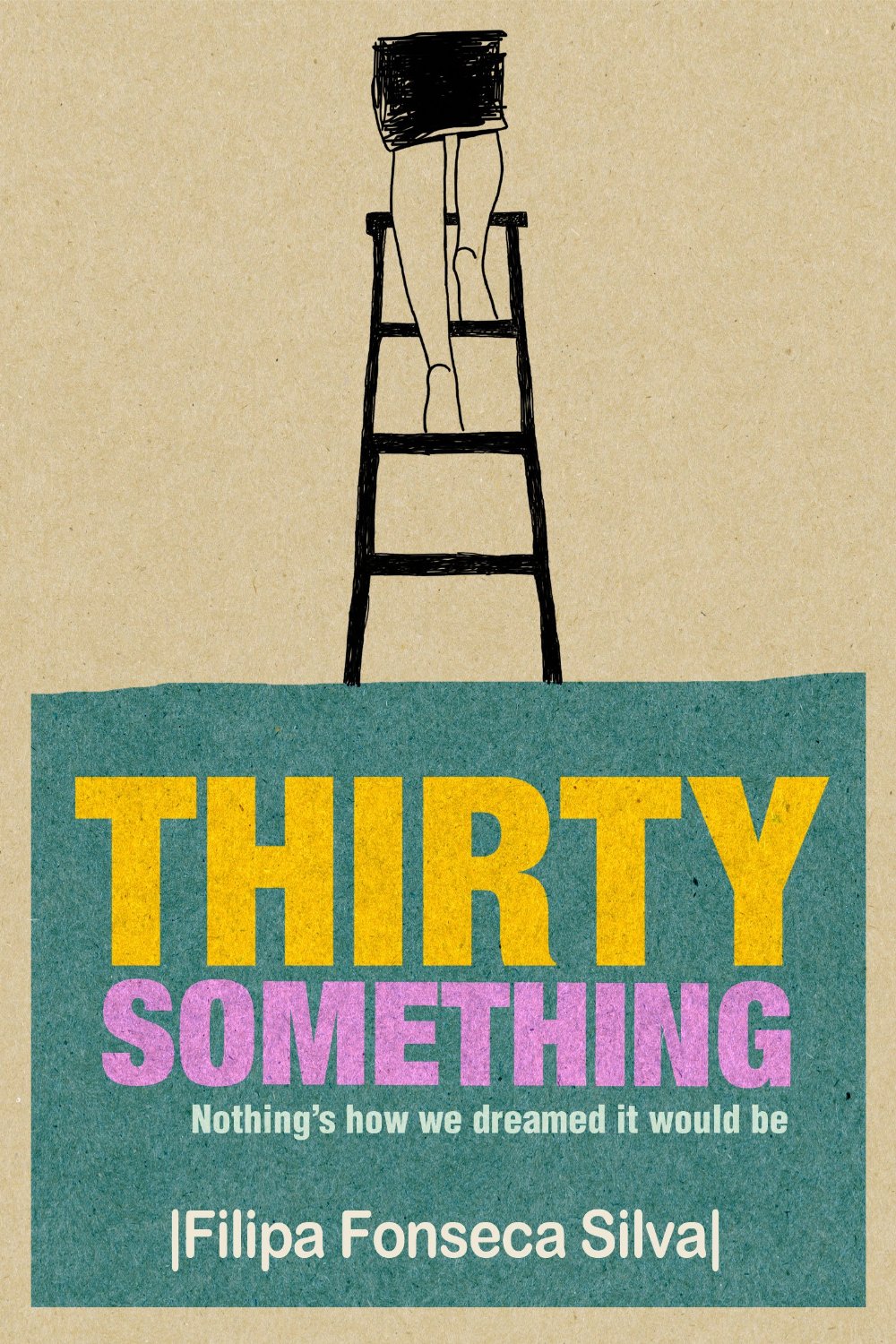
But there's more: once you submit your thoughts you can FREE DOWNLOAD a pdf copy of my Amazon Top 100 novel "Thirty Something - nothing's how we dreamed it would be". Why? Because it's my way of thanking everyone who can help prevent this man from being president.
WAIT! Why is a Portuguese author, who lives in Portugal, who only have been in the US for small leisure trips, who doesn't have a single relative living there, so concern about the next American president?
Well, because the US is one of the most powerful countries of the world, and what happens there reflects in the rest of the planet. So, yes, I'm worried about the outcome of the American elections because whoever becomes President will influence world peace, world's economic stability and the Earth sustainability. So yes, although I can't vote, although it's not my country, I want to prevent a maniac, egocentric, racist, xenophobe, misogynous and extremely rude man from getting in the White House.
So go ahead, share your thoughts and if you feel like it, download your free copy of my novel. And thank you in advance for not voting for Trump.
-

This is Carlota. At the time the video was made she was 19 monts old.
Proving that genetics really have an influence on each human being, she loves walking in high heels, just like her mom.
Yes, she's my daughter and yes, I know her teenage years will grow lots of grey hair in my head...
-

As a true fashionista, every year I wait in anticipation to see the Red Carpet looks at the Oscars. To me it's the most important Haute Couture moment after the Met gala. Yes I also like the films, yes I always have my favourites in each category, but there's nothing like the red carpet.
And to me, this years winners are:
 The always stunning Charlize Theron in Dior
 The always surprising Cate Blanchet in Armani
 The talented new comer Alicia Vikander in Louis Vuitton(please watch The Danish Girl and why this girl should've been nominated for the Leading Role)
 The model Dorith Mous in a gothic Victorian look by Dennis DiemAnd in the "not on the red carpet but also drop dead gorgeous at the Vanity Fair after party" category the beautiful Victoria Secret angel Sara Sampaio in Zuhair Murad
 and the always flawless Diane Krugger in a 1920's inspired work of art by Reem AcraWhat's not to love? Connratulations to all the designers, stylists and these stilish women who wear this works of art like nobody else.
-
-

She was never just Kurt's girfriend.
She was already an awesome artist way before they met. And kept on being so after he passed.
She never needed to live in his shadow. She never need to shout for atention. Her work speaks for herself. In music, in music, in life.
It happens she's a girl. Or has Kat George puts in this brilliant article, "there’s a stigma attached to Love that comes not because of her messiness, but by virtue of that perceived lesser quality: womanhood."
A must read! Really! Just follow the link
Thank you, Kat George. And thank you Courtney for your incredible talent, for your message, for your strength, for always doing your thing. You're the Queen!
-

I've been a very good girl this year.
In case you need some inspiration here's my favourites of the season
Josefina's ballet flats(Moscow special edition with music box) Dior tribale earrings
 Toino Abel baskets
 SKOG eyewear sunglasses
 Peter Pan by J.M.Barrie(amazing new edition by Harper Design)
 Merry Christmas!
-

This is one of the commandments of maternity. You can deny it all you like, you can say this won't happen to you. But it’s a fact of life, and the high divorce rate in couples with small children only goes to prove it.
I’ve already mentioned in other chapters how young mums feel tired, irritated and frustrated, and guilty. Tired because of so many nights without sleep and the extra work that comes with having a baby. Irritated because the kids so often push our patience to the limit. Frustrated because we want to do so many things – we want to be perfect mothers, wives and employees, but inevitably something has to give. Guilty because we often feel like running away or going back to the times when we didn’t have to worry about anyone except ourselves.
And as most mothers are actually quite well-balanced individuals, they don't offload these burdens at work (although we often feel like ripping certain co-workers’ heads off, it’s true), or on the children (who may often be the cause of all the irritation with their tantrums and fixations, but they didn’t ask to be born after all), or our friends (we don't often see them these days anyway). Who’s left, then, to soak up all that negative static that we accumulate over the course of the day/week? Our poor husbands.
I can almost hear the applause of all those men who’ve felt so wronged all these years. ‘Finally someone understands us,’ some men will say. ‘I always knew that but I never told anyone.’ ‘Well well. It wasn’t just me, then.’. But wait a minute, gentlemen. You aren't getting away with this so easily.
On behalf of all women, even the ones who say it isn't true, I admit we will inevitably treat our husbands badly at some point in our lives (or at some point in the day, to be honest). You, fathers, are our punch bags. You are the ones who are at our side on the sofa at the exact moment we need to let some fury vent. Yes, it’s wrong for us to take out all our rage on you, and we regret it often enough, and realize we’ve been bitches. Although we’ll rarely admit that to you. But there are so many times when you lot deserve every extra decibel, every glass smashed against the wall, every ‘You can’t do anything right.’
The fact is, no matter how ‘participative’ they may be, men can’t think beyond their own belly buttons. They just don’t think of the thousand and one things that need to be done in relation to the kids and the house, and that’s what pisses us off. You want some examples? I’ll give you some examples:
Going on holiday
Mum’s trying to pack her own bags and the kids’ bags too, with a three-page list in her hand to make sure she doesn’t forget anything, what with medicines, favourite toys, sunhats, towels, cardigans, chargers for this and that, toothbrushes, snacks for the journey, baby change bag, etc. etc. etc. Dad’s got his own bag to pack. He goes to the computer to look up the route or check the temperature at our destination or some other less important thing. Halfway through her three-page list, mum still finds time to pick out what she’ll wear for the journey, break up a fight over possession of the remote control and take the crusts off the little one’s toast, because ‘Daddy didn’t’ – and Daddy knows (or bloody well ought to!) she’s funny about her toast and won’t eat it any other way. Obviously it’s a question of minutes before mum comes out with ‘Do you mind leaving the ****ing computer for a minute and helping me out here?’ Dad’s taken aback. ‘You could have told me you needed help.’ Really? Did I really need to tell you?
The end of the day
Dad gets home. The kids are playing quietly in the living room, fresh from their bath. Mum’s making dinner. Dad comes in, helps set the table and sits down on the sofa. Two minutes later, in comes mum, shouting. ‘Look, why don’t you take your backside off the sofa and get the washing in off the line? You could at least put your own clothes away, they’re folded on top of the bed. Did you buy milk? Didn’t you? Don’t tell me you didn't notice we finished the last packet this morning? Why is it me who has to think of everything? Christ, you’d think you didn’t live here!’ At this point the reader may be thinking, ‘Isn't Mum overdoing it a little here? The poor guy’s just got home, he’s only taken a minute to relax on the sofa after a hard day’s work...’ Perhaps, reader. Perhaps. But what you don't know is that while Dad comes home in the same clothes he left in, Mum has changed three times that day already: the first time after a disastrous incident with a small child and a shower head, the second after the younger one threw up his milk, and the third after one of them flipped a plate of soup in the air. She’s also been mopping up a waterlogged bathroom, and making a new batch of rice after burning it the first time. If, instead of flopping out on the sofa, the gentleman of the house had gone straight to his wife and asked ‘ What can I do to help you?’, he’d have earned a smile – and some domestic harmony.
Sunday outings
Dad gets up quite calmly, on mum’s third attempt to awaken him, and notices his ‘Good morning, sleep well?’ goes unanswered. She’s woken up in a bad mood, he thinks. Oh no, my friend. She didn’t wake up in a bad mood. The reason she’s in a bad mood is she didn’t get much sleep, what with getting up to change one of the kids’ beds and shush the other who’s had a nightmare, followed by an early awakening with ‘Mummy I’m not sleepy and I’m hungry but it has to be you who makes breakfast because Daddy doesn't know how I like my cereal.’ Then she’s hung out the clothes she washed during the night to make sure they’re dry enough for pressing in the evening. And while His Lordship loafs on the sofa watching sports programmes, she’s picking out clothes for everyone and making sure there’s a change of clothes in the baby bag because we’ll be gone all day and while I’m at it I better pack biscuits, and a sunhat, and the football in case we go to the park, and a jar of fruit pudding in case we’re late getting lunch.
Women do mistreat their husbands. Once they’re mothers. It’s unquestionably true. They’re not as gentle, not as available for love, less interested in their husband’s day at work, less alert to his needs. Yes, we should examine our conscience from time to time, and say sorry, and be more tolerant and understand that men don't have the same natural way with kids that we have. For the kids, there’s nobody quite like mum. But guys, you could grow up a little and stop acting the victim. Open your eyes and enjoy the view beyond your belly button. And if you really are incapable of thinking about the duties your children and your home impose on you, even the most basic stuff like checking to see their pyjama bottoms haven’t slipped off during the night or making the bed every day, then ask. And above all, before you flop down on the sofa with the iThing, offer to help. It’s an offer that will be greatly appreciated, and you’ll find you’ll be mistreated less.illustration by Sofia Silva -

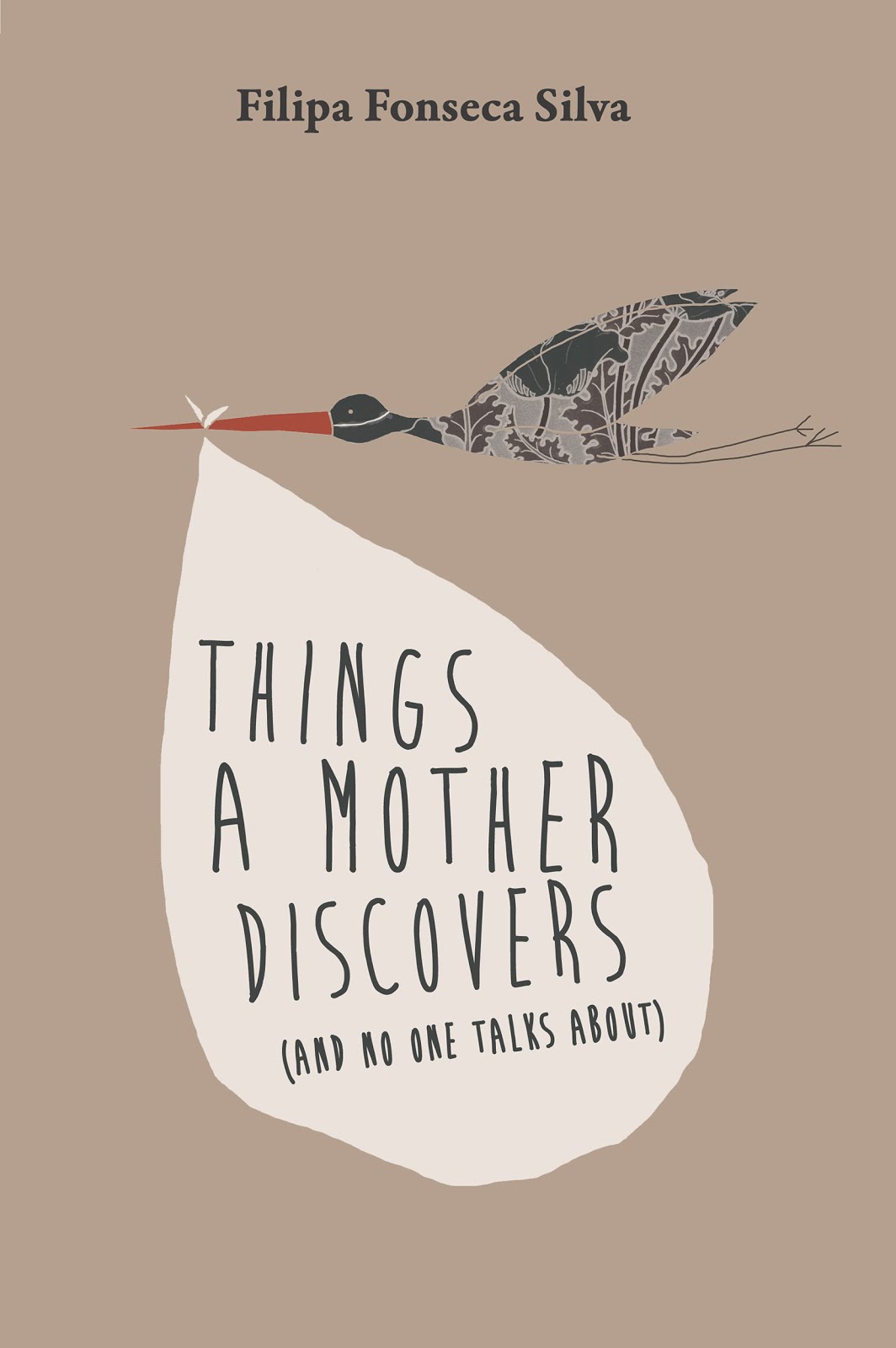
For all of you who didn't read my new book on motherhood, you can free download it from Story Cartel for the next 15 days.
Story Cartel is a new way for readers and authors to connect. Every book is free for a limited time. Readers support authors by leaving their honest review. For book lovers, Story Cartel is a resource to discover great books and fresh authors; for authors, it's a platform to build deeper relationships with readers.As for my book, its a collection of humorous texts about pregnancy and motherhood. Written in a sarcastic tone, it’s the perfect book for new parents (who will learn precious tips on how to deal with the unexpected), experienced parents (who will know they’re not alone), pregnant parents (just to get ready for what really comes ahead) and also for those who don’t want to be parents and needed new reasons to stay so.Because being a mother is awesome, but a day at the beach with only a Mojito as company, doesn't come far behind.
-

Everyone knows I'm a shoe addict. Well, if you didn't know, now you do.
I slob before each awesome collection by world class designers such as Manolo Blahnik, Christian Louboutin, Roger Vivier, Jimmy Choo or Giuseppe Zanotti. But there's a Portuguese name which can (and should) be among those geniuses. Luís Onofre.
His work is amazing and I've been following it since the beginning, long before he opened his flagship store in the most exclusive street of Lisbon. I can't wait to see what he does next.
Check his website: http://luisonofre.com


-

Seems like Dolce & Gabanna read my essay The importance of a wardrobe makeover before creating their last Fall collection, thus showing a super romantic and glamorous vision of motherhood.
It's not the first time the designers call upon the big Italian family imagery on their ad campaigns. But this time they went a few steps further, creating a collection that praises the mother figure, with breathtaking dresses embroidered with phrases such as "I love you mama" or " You're the most beautiful mother in the world". Plus, on the fashion show, models were invited to bring their kids to the runway (even the unborn ones) and on the print ads mothers are the absolute stars.
What can I say? In two words: LOVE IT!
And now I'm going to slob over the images of this beautiful collection. Bye, bye!


Subscribe to:
Posts (Atom)